Article at a Glance
- The Problem: Over-reliance on upper chest muscles (scalenes/pectorals) leads to chronic fatigue, neck pain, and systemic stress.
- The Identification: Use the “Mirror Test” to check for vertical shoulder movement during inhalation.
- The Fix: Neuromuscular re-education via the Mitchell method and optimizing sleeping positions to favor diaphragmatic expansion.
1. Identification and Symptoms
How does shallow chest breathing feel?
Internally, shallow chest breathing often feels like a subtle, persistent tightness or a sense of being perpetually unsatisfied with your air intake. Instead of a deep, nourishing expansion in your belly, you might experience a localized pressure high up in your chest cavity. It often feels as though your breath is hitting an invisible wall just below the collarbone, never reaching the lower lobes of your lungs. This lack of depth can create a phantom sensation of anxiety or a “fluttery” feeling behind the breastbone, even when you aren’t consciously stressed, which can sometimes mirror the physiological effects of sensory overload syndrome. Many people describe it as a heavy or constricted sensation in the upper chest, as if the ribs are encased in a tight vest that refuses to expand. Over time, this restricted movement can lead to a dull ache in the chest muscles, making the simple act of breathing feel like a chore rather than a natural, rhythmic process.
What are the visible signs of shallow chest breathing?
When observing someone struggling with this habit, the most prominent visible sign is the exaggerated vertical movement of the upper chest and shoulders. Unlike healthy diaphragmatic breathing where the abdomen rises and falls, shallow chest breathing causes the shoulders to shrug upward toward the ears with every inhale. You might notice the collarbones lifting sharply and the muscles in the neck—specifically the sternocleidomastoid—becoming taut and prominent as they strain to lift the ribcage. Posture often suffers as well; people frequently develop a “hunched” or rounded shoulder look because the chest muscles are constantly contracted. This structural tension can be exacerbated by external factors such as toxic clothing that physically restricts the torso. Another clear indicator is the lack of outward movement in the lower ribs and stomach area. The chest remains high and rigid, while the belly stays flat or even pulls inward during inhalation, which is a paradoxical and inefficient way for the body to process oxygen.
How do you test for shallow chest breathing at home?
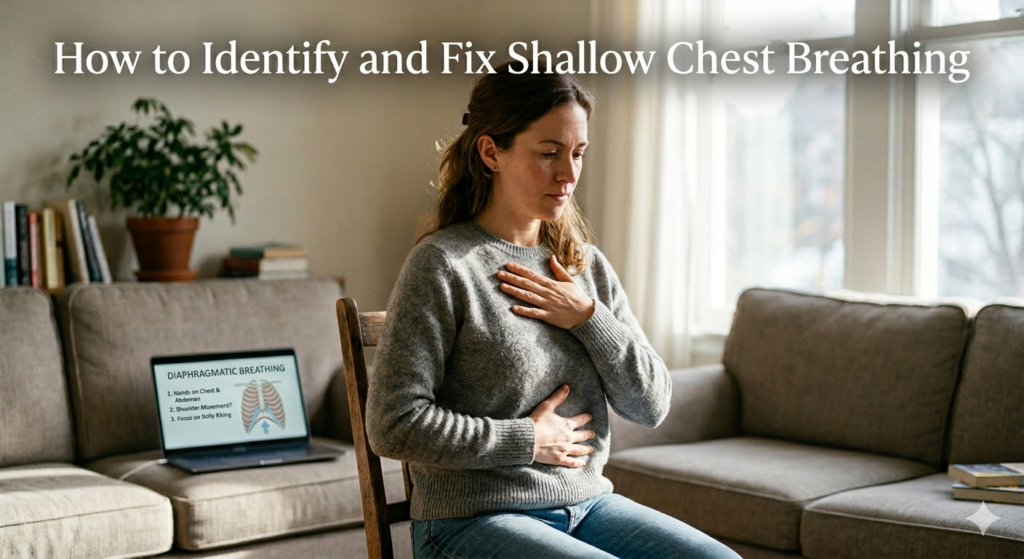
You can easily self-diagnose this pattern using a simple “Hand-on-Heart” test to monitor your mechanical movement. Sit comfortably in a chair and place one hand firmly on your upper chest and the other hand on your abdomen, just above your belly button. Take several natural breaths and observe which hand moves the most. If the hand on your chest is rising and falling significantly while the bottom hand remains still, you are predominantly engaged in shallow chest breathing. Another effective method is the “Mirror Test.” Stand in front of a full-length mirror and take a deep breath; if you see your shoulders move upward or your chest expand outward while your stomach remains flat, your respiratory mechanics are skewed toward the upper thorax. Monitoring your breath rate is also helpful, as chest-focused breathing is typically faster and more irregular than deep, belly-focused breathing, often exceeding fifteen breaths per minute during rest.
2. Medical and Psychological Causes
What are the primary causes of chronic shallow chest breathing?
The transition into chronic shallow chest breathing is often a mechanical response to modern environmental stressors and physical restrictions. One of the most prevalent causes is prolonged poor posture, particularly the “forward head” position common among office workers, which compresses the diaphragm and forces the upper chest to take over. Additionally, wearing restrictive clothing or tight belts can physically prevent the abdomen from expanding, leaving the upper chest as the only available space for air displacement. Chronic pain in the back or abdomen can also cause a person to guard their midsection, leading to a compensatory shift toward high chest movements. Over time, these physical triggers cause the primary breathing muscle, the diaphragm, to weaken from disuse, while the secondary muscles in the neck and thorax become overdeveloped and hyper-sensitive.
Why do I unconsciously use shallow chest breathing?
Unconsciously adopting a shallow chest breathing pattern is usually the result of long-term neuromuscular habituation, where the brain begins to accept an inefficient process as the “new normal.” When you are under constant low-level stress, your body stays in a state of semi-arousal, and the brain automates a chest-dominant pattern to keep the body ready for quick action. This is often reinforced by “sensory-motor amnesia,” a condition where the nervous system literally forgets how to engage the diaphragm because the chest muscles have been doing the work for so long. This state of constant arousal can lead to sensory overload, further locking the pattern in place. Once this neural pathway is established, the subconscious mind maintains the shallow chest rhythm even during sleep or relaxation. Breaking this cycle requires conscious re-education of the nervous system to override these deep-seated, automatic patterns and remind the body that the chest is not meant to be the primary engine for respiration.
How to tell if shallow chest breathing is caused by anxiety?
Distinguishing whether your shallow chest breathing is rooted in anxiety involves looking for a specific “feedback loop” between your mind and your ribcage. Anxiety-driven breathing is often accompanied by other psychological markers, such as racing thoughts, a sense of impending doom, or a sudden “tight knot” feeling in the center of the chest. If your chest-heavy breathing tends to spike during social interactions or high-pressure tasks and then settles slightly when you are alone or distracted, it is likely tied to your emotional state. Furthermore, anxiety-induced shallow chest breathing often leads to hyperventilation, where you exhale too much carbon dioxide, resulting in tingling fingers or lightheadedness. In these cases, the chest movement isn’t just a physical habit; it is a physical manifestation of a nervous system that is stuck in a “fight-or-flight” response, using the upper lungs to prepare for a perceived threat.
Can heart problems lead to shallow chest breathing?
Yes, various heart conditions can lead to an involuntary shift toward shallow chest breathing as the body attempts to compensate for reduced circulatory efficiency. When the heart struggles to pump blood effectively, the lungs may work harder to ensure the blood remains oxygenated, often resulting in rapid, high-chest movements. Conditions like congestive heart failure can cause fluid buildup in the lungs, making deep diaphragmatic breaths physically difficult or even painful, which forces the patient to rely on the upper chest for shorter, more frequent sips of air. It is important to note that if your shallow chest breathing is accompanied by hidden signs of blood clots, swelling in the ankles, extreme fatigue, or a persistent cough, it may be a clinical sign that the heart is under stress. On a high-authority site, it is crucial to emphasize that while chest-dominant breathing is often a habit, it can also serve as a secondary symptom of cardiovascular struggle.
What specific diseases are linked to shallow chest breathing?
Beyond general habits, several clinical pathologies are directly linked to the development of a shallow chest breathing profile. Chronic Obstructive Pulmonary Disease (COPD) and emphysema are primary examples, as these diseases damage the air sacs and trap air in the lungs, causing the chest to remain “puffed out” or hyper-inflated, which limits diaphragmatic movement. Similarly, asthma can cause the airways to constrict, leading to an emergency-style chest-breathing pattern during flare-ups. Neuromuscular disorders, such as Parkinson’s disease or Multiple Sclerosis, can also impair the nerves that control the diaphragm, leaving the patient dependent on the accessory muscles of the chest to stay oxygenated. Even structural issues like scoliosis or severe kyphosis can physically distort the thoracic cavity, making it mechanically impossible to breathe any other way than through the upper chest. Understanding these diseases highlights that shallow chest breathing is often a compensatory mechanism for a deeper internal struggle.
The Role of “Email Apnea” and Digital Stress
A modern phenomenon often contributing to unconscious shallow breathing is “Email Apnea.” This occurs when the body enters a subtle startle response while checking notifications or focusing intensely on a screen, causing the breath to hold or migrate exclusively to the upper chest. This digital stress locks the ribcage in a high, inhaled position, reinforcing the very neuromuscular amnesia that prevents diaphragmatic engagement.
3. Risks and Long-Term Outlook
Is shallow chest breathing dangerous?
In the immediate sense, shallow chest breathing is rarely life-threatening for healthy individuals, but it acts as a significant stressor that degrades your body’s safety systems. When you rely on the upper chest to pull in air, you are essentially signaling to your brain that you are in a state of emergency. This triggers a constant release of cortisol and adrenaline, which can lead to an elevated heart rate and increased blood pressure even when you are resting. The primary danger lies in the reduced efficiency of gas exchange; because the lower parts of the lungs—where the most blood flow occurs—remain under-ventilated, the body has to work much harder to maintain oxygen levels. This unnecessary strain on the cardiovascular system can cause immediate fatigue, lightheadedness, and a weakened immune response, making the body more vulnerable to acute stressors and environmental toxins.
What are the long-term effects of shallow chest breathing on the body?
Over months and years, chronic shallow chest breathing reconfigures the physical structure of your upper body and alters your nervous system’s baseline. The accessory muscles of the chest, such as the pectorals and the scalenes in the neck, become chronically shortened and tight, leading to a permanent “hunched” posture and potential nerve compression like thoracic outlet syndrome. This constant tension can result in chronic headaches and referred pain down the arms. Furthermore, because the diaphragm remains inactive, the internal organs do not receive their natural “massage” during respiration, which can lead to sluggish digestion and lymphatic congestion. Perhaps most significantly, the vagus nerve—the body’s primary highway for relaxation—is rarely stimulated, leaving the individual in a state of chronic sympathetic dominance. This contributes to long-term systemic inflammation and emotional burnout, issues that can be further complicated by hormesis and resilience imbalances.
When should you worry about your shallow chest breathing?
You should begin to worry about your shallow chest breathing if it transitions from a manageable habit into a source of physical distress or functional limitation. Medical “red flags” include experiencing chest pain, palpitations, or a feeling of “air hunger” that does not go away even when you are calm and resting. If your chest-focused breathing is accompanied by a bluish tint to your lips or fingernails, extreme lethargy, or if you find yourself unable to speak in full sentences, it indicates a serious drop in oxygen saturation that requires immediate clinical attention. Such symptoms may sometimes mask other underlying issues, like hidden signs of blood clots. Additionally, if the habit is causing chronic, debilitating pain in the neck and shoulders that prevents you from performing daily tasks, it is time to seek professional help from a physical therapist or a respiratory specialist to prevent permanent structural damage to the thoracic area.
4. Corrective Methods and Training
How to reverse and fix shallow chest breathing?
Reversing the habit of shallow chest breathing requires a hands-on approach to release the physical restrictions in the upper torso. One effective manual correction involves placing light pressure on the upper chest while consciously attempting to keep that area still during inhalation. This physical cue forces the body to seek expansion elsewhere, typically moving the effort downward toward the diaphragm. You can also utilize self-massage techniques on the intercostal muscles between the ribs and the pectorals to break up the chronic tension that keeps the chest locked in a high position. Stretching the thoracic spine and opening the chest through “doorway stretches” helps realign the ribcage, making it mechanically easier to transition away from chest-dominant patterns. Integrating these movements into untapped home workout programs can provide a structured way to physically loosen the “armored” muscles of the upper chest, removing the structural barriers that prevent deep, restorative breathing.
How to train yourself to stop shallow chest breathing permanently?
Permanent change comes through neuromuscular re-education, which essentially teaches your brain to prefer the diaphragm over the upper chest. To do this, you must engage in consistent daily practice, such as the Mitchell or Jacobson methods, which focus on identifying and releasing specific points of tension in the body. Start by lying flat on your back with a small book placed on your abdomen; your goal is to make the book rise while keeping your chest perfectly still. This visual and physical feedback helps your nervous system rebuild the neural pathways for diaphragmatic movement. Over time, this conscious training overwrites the old “fight-or-flight” chest habit, eventually making deep breathing your body’s automatic, default setting. For a more comprehensive approach to body-mind connection, exploring ashwagandha benefits may assist in managing the underlying stress that often drives these unconscious patterns.
How can I increase oxygen flow to my lungs effectively?
To increase oxygen flow, you must focus on lung efficiency rather than just taking “bigger” breaths into your chest. Effective oxygenation occurs in the lower lobes of the lungs, where blood flow is most concentrated. You can build this capacity by practicing “pursed-lip breathing” or “box breathing,” which slows down the respiratory rate and prevents the collapse of small airways. By extending the exhale, you clear out more residual carbon dioxide, creating more space for fresh, oxygen-rich air to enter. Exercises that improve the mobility of the lower ribcage are also vital, as they allow the lungs to expand fully in three dimensions rather than just pushing upward into the chest. This structural efficiency ensures that every breath you take delivers maximum oxygen to your bloodstream with minimal physical effort, contributing to overall metabolic health optimization.
One of the most overlooked corrective methods is proper oral posture. By resting your tongue on the roof of your mouth (just behind the front teeth), you naturally encourage nasal breathing. Nasal respiration provides the necessary resistance to trigger the diaphragm, making it significantly harder for the body to default back into shallow chest patterns.
Maximizing Expiratory Strength
To effectively increase oxygen flow, you must focus on the full exhale. Shallow chest breathers often suffer from “stacked breathing,” where new air is pulled in before the old carbon dioxide is fully expelled. By consciously extending your exhale—effectively “emptying the cup”—you create a natural vacuum in the lower lungs. This vacuum allows the next inhale to drop deep into the abdomen without any conscious muscular effort, resetting your nervous system instantly.
5. Specialized Technical Insights
What is the difference between shallow chest breathing and shortness of breath?
While they are often confused, shallow chest breathing and shortness of breath (clinically known as dyspnea) represent two different physiological states. Shallow chest breathing is a mechanical habit or a pattern of respiration where air is restricted to the upper thorax rather than reaching the deep diaphragm. In contrast, shortness of breath is a subjective sensation of intense airway distress or “air hunger,” where the person feels they cannot get enough oxygen regardless of their breathing depth. You can engage in shallow chest breathing without feeling breathless, especially during periods of low-level stress. However, if that chest-dominant pattern becomes too inefficient to meet the body’s metabolic demands, it can eventually trigger the acute sensation of shortness of breath. Understanding this distinction is vital because fixing the mechanical “chest” habit often prevents the onset of the frightening “breathless” sensation, much like addressing brain dehydration can resolve subtle cognitive fatigue.
What sleeping position provides the most oxygen for chest breathers?
For those who struggle with shallow chest breathing, the most effective sleeping position for maximizing oxygen flow is sleeping on the side with a slight elevation (lateral recumbent position). This position prevents the weight of the chest wall from compressing the lungs and allows the diaphragm more freedom to move without fighting gravity. Placing a pillow between the knees helps keep the spine aligned, which reduces the structural “kink” that often forces the body into high chest movements. Alternatively, sleeping on your back with a wedge pillow to elevate the torso at a 30-degree to 45-degree angle can be highly beneficial. This elevation uses gravity to help the lungs expand downward, naturally discouraging the shallow chest rhythm and promoting a more restful, oxygen-rich sleep cycle that supports the recovery of the thoracic muscles. For those looking to further optimize their nocturnal recovery, exploring the benefits of magnesium glycinate can help relax the respiratory muscles during rest.
What is the “forbidden” sleeping position that restricts full breathing?
The “forbidden” position for anyone trying to correct shallow chest breathing is sleeping on your stomach (prone position). While some find it cozy, this position is the most restrictive for the respiratory system because it forces the entire weight of your body onto your ribcage and abdominal cavity. This pressure physically prevents the diaphragm from dropping, leaving the body with no choice but to rely entirely on shallow chest breathing to survive the night. Furthermore, because you must turn your head to one side to breathe while on your stomach, it creates intense strain on the neck muscles—specifically the scalenes—which are the same muscles that drive inefficient chest-dominant breathing during the day. Waking up with a stiff neck and a feeling of exhaustion is often a direct result of this position “locking” your chest into a restricted, low-oxygen pattern for eight hours. Such physical restriction can contribute to systemic stress, making it harder to reap the benefits of hormesis.
Medical Disclaimer: The information provided in this article regarding shallow chest breathing and associated relaxation techniques is for educational and informational purposes only. It is not intended to be a substitute for professional medical advice, diagnosis, or treatment. Always seek the advice of your physician or another qualified health provider with any questions you may have regarding a medical condition.