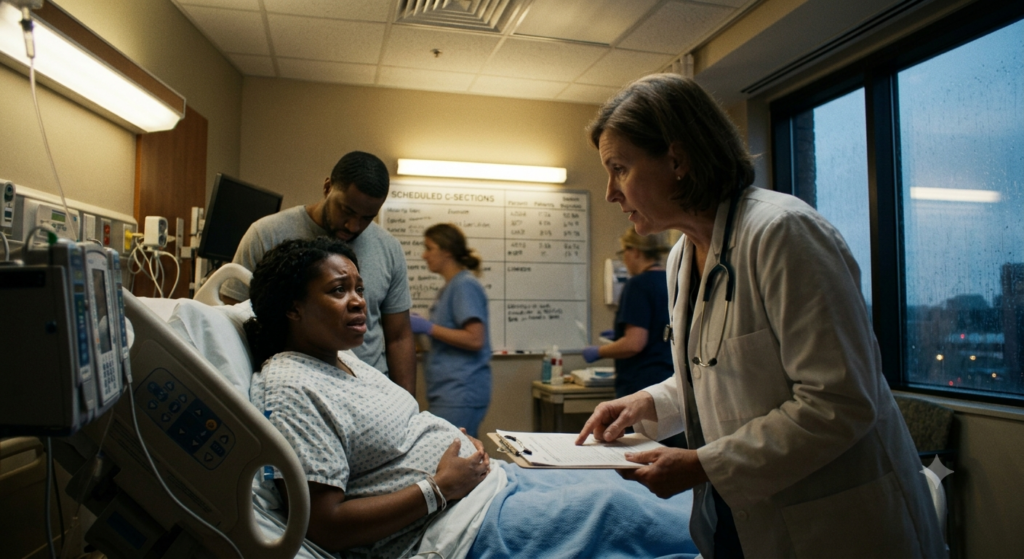
How Doctors Manipulate a Woman into a C-Section
While C-sections can be life-saving procedures when legitimate medical emergencies arise, a growing number of surgical deliveries are driven by institutional convenience, financial incentives, and defensive medical practices rather than clinical necessity.
In many private healthcare settings, steering a woman toward a surgical birth is rarely done through direct coercion. Instead, it relies on psychological framing, calculated risk amplification, and the gradual erosion of a patient’s confidence in her body’s natural ability to give birth.
1. Sowing Early Seeds of Doubt
The process often begins during routine antenatal visits in the first or second trimester. A doctor may highlight minor, normal variations during an ultrasound or physical exam and frame them as potential warning signs.
- The “Small Pelvis” Myth: Claiming a woman’s pelvis is too narrow (cephalopelvic disproportion) long before labor even begins, despite true anatomical disproportion being extremely rare.
- Exaggerating Minor Stats: Pointing to slight blood pressure fluctuations or routine weight gains as indicators of high-risk pregnancy.
- Normalizing Fear: Frequently emphasizing the unpredictability, pain, and physical trauma of vaginal delivery while positioning surgery as controlled, clean, and safe.
2. Over-Medicalizing a Normal Pregnancy
As the third trimester approaches, routine pregnancy milestones are re-framed through a lens of potential disaster. Every standard scan is scrutinized for reasons to intervene.
- Fixating on Estimated Fetal Weight: Telling a mother her baby is “too big” (macrosomia) based on late-term ultrasounds. Ultrasound weight estimates carry an error margin of up to 20%, yet doctors often present them as definitive proof that natural labor is unsafe.
- Nuchal Cord Alarmism: Pointing out a loop of umbilical cord around the baby’s neck during a scan. A nuchal cord occurs in roughly one-third of all healthy births and is rarely an indication for surgery on its own, but it is frequently used to cause panic.
- Slight Amniotic Fluid Variations: Labeling minor, temporary drops in fluid levels as immediate dangers to the baby.
3. Pitching the “Convenience and Safety” Package
Around weeks 32 to 36, the conversation subtly shifts from clinical monitoring to scheduling logic. The physician introduces non-medical arguments wrapped in protective language.
- Predictability: Emphasizing the benefit of picking an exact date and time, avoiding “unexpected midnight trips” to the hospital, and ensuring the primary doctor is guaranteed to deliver the baby.
- Preserving Pelvic Health: Suggesting that a C-section protects against long-term pelvic floor stretching or incontinence, while ignoring the major abdominal recovery risks associated with surgery.
- Doctor Availability: Recommending a scheduled delivery before a holiday, weekend, or vacation under the guise of guaranteeing proper medical coverage.
4. Creating Urgent “Manufactured Risks” at Full Term
As the due date approaches (weeks 37 to 39), the framing becomes increasingly urgent. This is where the medical team creates a scenario where refusing a C-section feels like an irresponsible risk to the baby’s life.
- Framing Inductions as Essential: Recommending early labor induction without a medical reason, which frequently leads to an “intervention cascade” where synthetic oxytocin stalls labor and triggers artificial fetal distress, forcing an emergency C-section.
- Vague “Fetal Distress” Claims: Citing subjective readings on continuous fetal heart rate monitors without walking the parents through the data or attempting simple repositioning techniques first.
- Time-Capped Labor: Declaring that labor has “failed to progress” after only a few hours of active labor, ignoring updated medical guidelines that allow for longer, natural labor progression.
5. Securing Compliance Through Fear
The final stage of manipulation relies on emotional leverage. When a mother hesitates or asks for more time, the doctor may shift to high-pressure phrasing.
- Leveraging Guilt: Asking questions like, “Why take any risk with your baby’s life?” or “Do you really want to gamble on a natural birth?”
- Rushing Informed Consent: Presenting surgical consent forms in moments of physical exhaustion or anxiety, giving the family no time to evaluate options or seek a second opinion.
By systematically replacing confidence with fear, doctors can lead patients to request or willingly accept an unnecessary surgical procedure, believing it was their own decision all along.
Are hospitals pushing women to C-section?
Evidence shows some private hospitals push women toward unnecessary C-sections. These surgical decisions are driven by financial incentives, scheduling convenience, and legal fear. While the WHO recommends C-section rates stay between 10% and 15%, private rates soar much higher.
However, relying solely on national statistics ignores the subtle clinical pressure mothers face during labor. Behind these inflated numbers lies a pattern of rigid timelines and unnecessary intervention. Early pitocin induction and forced bed rest frequently create artificial distress. These cascading procedures back mothers into a corner, making surgery seem like the only option.
To counter these systemic pressures, families must choose a supportive, evidence-based care team early. Hiring a trained doula and crafting a detailed birth plan protects your labor boundaries. Ultimately, prioritizing physiological birth practices ensures medical interventions are used only when truly necessary.
How to avoid a C-section in India?
To avoid an unnecessary C-section in India, select a transparent hospital, hire an independent doula, and avoid early labor induction. The high rate of surgical births in Indian private healthcare makes proactive preparation essential. Yet, standard provider selection alone fails when faced with subtle hospital protocols during labor.
Routine continuous fetal monitoring restricts natural movement and reduces crucial pelvic opening space. This physical restriction slows cervical dilation and leads to unnecessary synthetic oxytocin usage.
These rapid contractions often trigger acute fetal distress, which directly forces surgical intervention. Combining active upright labor positioning with an evidence-based birth plan resolves these artificial bottlenecks at their root source.
How to avoid an unnecessary C-section?
To avoid an unnecessary C-section, select a supportive care provider and hire a skilled birth doula. Delaying hospital admission until active labor is well underway further lowers your surgical birth risks. Navigating these early choices through dedicated women’s health clinics provides essential guidance for managing prenatal care effectively. However, this standard advice remains incomplete when unexpected physiological hurdles quietly stall labor progress.
Elevated maternal anxiety triggers adrenaline release, which directly weakens natural uterine contraction intensity. Simultaneously, sub-optimal fetal positioning restricts pelvic passage and creates prolonged, exhausting labor delays. Staying mobile despite discomfort is key, especially given the risks associated with forced bed rest during prolonged hospital stays.
These hidden mechanical bottlenecks frequently prompt care teams toward cascade medical interventions and forced surgeries. Mothers can easily prevent these artificial complications by maintaining freedom of movement during contractions. Combining targeted maternal biomechanics with active relaxation techniques upgrades standard preparation to resolve labor stalls, helping your body build physical strength through principles of hormesis and health resilience.
Which type of delivery is best?
A vaginal delivery is generally considered the safest and best choice unless medical reasons require a C-section. These two main options form the foundation of modern delivery choices for expecting mothers. Partnering with supportive women’s health clinics helps mothers evaluate these delivery options based on their personal care needs. However, evaluating delivery types strictly by broad medical safety defaults overlooks individual clinical realities.
Unseen mechanical factors like pelvic asymmetrical tightness or acute fetal malpositioning can alter birth safety. These physical bottlenecks increase maternal distress and significantly reduce natural contraction force during late stage labor. Maintaining gentle movement throughout labor helps ease body stress and protects against risks linked to prolonged immobility, such as hidden signs of blood clots.
Such complications rapidly turn a routine vaginal delivery into an urgent, unplanned surgical procedure. Combining personal anatomical assessment with adaptive birth positions upgrades standard delivery advice for optimal safety. Preparing your body to adapt to labor stressors also leverages natural principles of hormesis and health resilience for a smoother recovery.
What are the three types of C-sections?
The three primary types of C-sections are elective, planned, and emergency procedures based on timing and medical urgency. These core classifications define how surgical deliveries are categorized in clinical practice. Exploring your options through specialized women’s health clinics ensures personalized guidance tailored to your specific pregnancy needs.
However, viewing surgical births solely through operational timing obscures the crucial anatomical differences in uterine incisions. Low transverse, low vertical, and classical vertical incisions carry distinct structural implications for future pregnancies. Proper care and monitoring during post-surgical bed rest are essential, particularly to watch for hidden signs of blood clots following abdominal surgery.
Classical vertical cuts compromise uterine wall integrity, which significantly raises the risk of uterine rupture later. These physical structural variables dictate both immediate recovery protocols and future birth planning options. Evaluating uterine incision mechanics alongside timing categories allows mothers to make truly informed reproductive choices, while drawing on concepts of hormesis and health resilience to aid physical recovery and long-term healing.
Why do doctors discourage C-sections?
Doctors discourage unnecessary C-sections because they carry major surgical risks, longer recovery times, and higher health complications compared to vaginal birth. While surgical delivery remains life-saving during true emergencies, non-indicated procedures introduce unnecessary physiological harm. Consulting with trusted care teams at women’s health clinics can help expecting mothers understand these risks and explore safe delivery choices. However, simply warning mothers about general surgical risks fails to explain the complex biological trade-offs involved during birth.
Skipping vaginal passage deprives the newborn of critical microbial exposure necessary for robust immune development. Furthermore, surgical intervention bypasses natural hormonal surges, which directly impairs early uterine contraction and delays lactation onset. Post-operative recovery also requires close monitoring during extended recovery periods, especially to prevent complications like hidden signs of blood clots caused by limited mobility.
These hidden physiological bottlenecks increase long-term health vulnerabilities for both the mother and infant. Understanding these deep biological mechanisms allows parents to make truly informed decisions regarding labor management. Incorporating natural recovery strategies rooted in hormesis and health resilience helps support maternal healing and long-term vitality after childbirth.
Is a C-section 100% safe?
No, a C-section is not 100% safe because it is major abdominal surgery carrying inherent risks like infection and heavy bleeding. While medically necessary or life-saving in emergencies, complications can impact both the mother and the newborn child. Discussing surgical safety with professionals at dedicated women’s health clinics helps parents evaluate risks effectively. However, simply listing surface-level surgical hazards fails to explain how deeper physiological mechanical bottlenecks arise during delivery.
What is the biggest risk of a C-section?
The biggest risk of a C-section is severe bleeding, along with dangerous blood clots and future placenta complications. Because surgical birth requires major abdominal incision, it carries higher overall complication rates than a normal delivery. Consulting with specialized care providers at women’s health clinics ensures patients understand these surgical hazards beforehand. Yet, simply identifying individual surgical risks fails to explain how these dangers compound during complex physiological states.
Uterine atony prevents essential vascular constriction after placental separation, which directly accelerates rapid, life-threatening blood loss. Simultaneously, prolonged surgical immobility slows venous pelvic circulation, significantly increasing the risk for hidden signs of blood clots and deep vein thrombosis formation.
These interconnected physiological bottlenecks turn routine surgical procedures into acute, high-risk clinical emergencies. Combining proactive uterine tonics with early pneumatic calf compression protocols effectively mitigates these compounding vascular hazards, while adopting principles of hormesis and health resilience helps support overall post-surgical recovery.
Who is most at risk for a C-section?
Women most at risk for a C-section include those with prior surgical deliveries, fetal distress, breech presentation, or labor stalls. High maternal age, gestations with twins, and pre-existing medical conditions like hypertension further increase surgical likelihood. Seeking comprehensive risk evaluations at dedicated women’s health clinics helps high-risk mothers plan safer birth strategies. Yet, focusing only on high-risk medical labels misses the underlying physiological bottlenecks that trigger emergency surgeries.
Compromised placental perfusion reduces oxygen delivery to the fetus, causing sudden heart rate decelerations during contractions. Simultaneously, pelvic floor muscle hypertonicity restricts fetal head descent, causing arrest of labor dilation. Recognizing physical changes and monitoring circulation during prolonged bed rest is crucial, particularly when watching for hidden signs of blood clots in immobilized patients.
These combined physical stressors exhaust maternal endurance and force rapid clinical transition toward surgical intervention. Pairing targeted pelvic physical therapy with continuous intrapartum movement protocols addresses these functional bottlenecks before surgery becomes necessary. Integrating natural adaptive principles like hormesis and health resilience further helps the body withstand labor stress and optimize recovery.
How many times can a C-section be done?
There is no universal limit, but medical experts recommend capping C-sections at three or four. While some women undergo more safely, major complication risks rise significantly with each subsequent delivery. Consulting with specialized care providers at women’s health clinics helps mothers assess their surgical history and plan future pregnancies safely. However, relying on simple numerical limits ignores the cumulative anatomical damage from repeated abdominal procedures.
Dense scar tissue adhesions physically bind internal organs together, sharply increasing accidental organ injury risks. Post-surgical recovery from multiple procedures requires cautious monitoring during recovery phases, especially to watch for hidden signs of blood clots that can develop during extended post-op bed rest.
Simultaneously, progressive uterine wall thinning weakens tissue integrity, directly triggering life-threatening placenta accreta complications. These compounding structural bottlenecks turn routine repeat surgeries into highly complex, unpredictable clinical emergencies. Evaluating individual uterine scar thickness using specialized ultrasound upgrades standard numerical guidelines for patient safety, while applying principles of hormesis and health resilience supports long-term tissue healing and physical recovery.
Bypassing the vaginal canal prevents necessary mechanical chest compression, leaving residual amniotic fluid inside infant lungs. Concurrently, abdominal incision trauma triggers systemic inflammatory responses, which delays maternal mobility and early milk production. Early movement post-surgery is vital to avoid circulatory complications, such as hidden signs of blood clots during initial bed rest.
These cascading physical issues increase short-term neonatal respiratory distress and prolong maternal surgical recovery timelines. Integrating early post-operative mobilization with targeted respiratory therapy effectively resolves these hidden physiological hurdles. Utilizing gentle adaptation strategies based on hormesis and health resilience further assists the body in naturally repairing after surgical trauma.
Can the mother feel the C-section?
During a C-section, a mother does not feel sharp pain because regional anesthesia blocks pain signals. However, she will still experience strong pressure, tugging, and movement throughout the surgical procedure. Discussing sensory expectations with professionals at dedicated women’s health clinics can help mothers mentally prepare for the surgical environment. Yet, simply reassuring mothers about pain block efficiency overlooks how intense visceral pressure activates severe anxiety responses.
Mechanoreceptors in the abdominal wall register deep pulling forces as the surgical team opens tissue layers. This sudden visceral sensation triggers acute sympathetic nervous system arousal, causing rapid heart rates and panic. Remaining calm and monitored during recovery is vital, particularly when watching for physical stress signs like hidden signs of blood clots following surgical procedures.
These physiological stress responses can make benign tactile pressure feel like overwhelming physical distress. Pre-operative sensory prep paired with guided breathwork updates standard pain management to ensure psychological calm, while leveraging principles of hormesis and health resilience helps support autonomic nervous system recovery after stress.
How painful is a C-section?
A C-section involves no pain during surgery due to regional anesthesia, though significant post-operative pain occurs during incision recovery. Consulting with professionals at women’s health clinics can help mothers prepare an effective post-surgical pain management strategy. However, relying solely on standard post-surgical analgesics fails to manage deep visceral pain during active recovery phases.
Transsected abdominal nerves release local inflammatory cytokines, causing severe, localized tissue hyperalgesia around the surgical site. During post-operative bed rest, monitoring body responses is critical, especially when watching for circulatory issues like hidden signs of blood clots that require prompt attention.
Simultaneously, involuntary uterine contractions during breastfeeding trigger sharp pelvic cramping by compressing irritated nerve endings. These compounding neurological and muscular mechanisms turn basic movements into intensely uncomfortable physical bottlenecks. Combining scheduled multimodal analgesia with early micro-mobility protocols resolves these complex pain pathways, while leveraging principles of hormesis and health resilience helps support natural tissue healing and recovery.
How to overcome fear of C-section?
Overcoming C-section fear involves self-education, open clinical communication, birth planning, and structured relaxation techniques. Connecting with supportive care teams at women’s health clinics provides a safe space to discuss anxiety and build personalized strategies. Yet, passive cognitive education often fails when unaddressed surgical phobias trigger deep physiological panic responses.
Unmanaged medical anxiety activates acute sympathetic nervous system arousal, causing rapid pulse spikes and muscle rigidity. Understanding the physical steps of post-op recovery—including how to monitor for circulatory issues like hidden signs of blood clots—helps demystify the care process and restore a feeling of control.
This heightened physical tension increases systemic pain sensitivity during pre-operative preparations, heightening perceived surgical threat. These interlocking physiological stressors disrupt rational thought and transform standard clinical environments into overwhelming emotional triggers. Combining somatic grounding exercises with structured sensory walkthroughs converts passive knowledge into active emotional regulation for birth safety, while leaning into concepts of hormesis and health resilience helps train the mind and body to adapt to temporary stressors.
Do C-section babies cry at birth?
Most C-section babies breathe and cry at birth, though their initial cry may be delayed or softer. Expecting immediate robust crying ignores the unique physiological transitions of surgical delivery, which can be better understood through resources at women’s health clinics. Without the mechanical chest compression of a vaginal birth, retained fetal lung fluid lingers in airway passages.
Maternal anesthesia exposure can also transiently suppress the infant’s central respiratory drive, dampening initial vocalization. As the clinical team manages immediate neonatal care, close post-operative monitoring of the mother begins, particularly watching for circulatory risks like hidden signs of blood clots during initial recovery.
These temporary respiratory bottlenecks delay rapid fluid clearance and hinder forceful pulmonary expansion right after delivery. Immediate gentle tactile stimulation paired with brief airway suctioning optimizes neonatal lung expansion to ensure strong respiratory effort, while leveraging physiological adaptation concepts like hormesis and health resilience supports both mother and baby through birth transitions.
Can I hold my baby right after a C-section?
Mothers can usually hold their baby right after a C-section through immediate skin-to-skin contact when both remain medically stable. Preparing a birth plan in advance with your care team at women’s health clinics helps ensure your bonding preferences are honored safely. However, assuming immediate contact always flows smoothly overlooks common intraoperative physical barriers.
Sterile surgical drapes, restrictive intravenous lines, and maternal arm restraints limit upper body mobility. Anaesthetic side effects like severe shivering and muscle weakness further compromise safe newborn handling. As recovery begins, maintaining circulation is essential, especially when watching for complications like hidden signs of blood clots following surgical immobility.
These mechanical constraints create significant safety risks, forcing clinical teams to delay contact until post-operative stabilization. Writing a gentle caesarean birth plan that requests unmanipulated arm freedom enables safe, early bonding, while utilizing principles of hormesis and health resilience supports quick physical recovery and maternal adaptation after surgery.
Is it possible to breastfeed after a C-section?
Breastfeeding is fully possible after a C-section, though mature milk supply may take an extra 24 to 48 hours to arrive. However, simply waiting for milk production ignores hidden hormonal disruptions caused by surgical interventions. Post-operative cortisol spikes and delayed placental separation stall early prolactin synthesis in maternal pathways.
Incisional pain also restricts comfortable holding angles, hindering effective latching mechanics during critical initial feedings. These hormonal and structural barriers disrupt early oxytocin release, slowing down the natural milk ejection reflex. Initiating immediate skin-to-skin contact paired with side-lying latch techniques overcomes surgical delays to establish robust lactation.
Do C-section babies gain weight slower?
C-section babies often show higher initial fluid weight loss and delayed return to birth weight, yet experience accelerated weight gain later. However, tracking simple scale readings fails to capture underlying metabolic and microbiome shifts.
Surgical delivery bypasses beneficial maternal vaginal microbes, altering early infant gut flora colonization. This delayed bacterial seeding impairs nutrient absorption during early feeding stages while promoting systemic metabolic inflammation later on.
Simultaneously, post-surgical lactation delays cause temporary energy deficits during crucial early developmental windows. These hidden physiological bottlenecks disrupt early growth trajectories and increase later metabolic risks. Combining targeted infant probiotics with early lactation support optimizes nutrient absorption to balance long-term weight trajectories.
Dataset: Are Hospitals Pushing Women to C-Section?
Dataset Metadata
| Field | Details |
|---|---|
| Dataset Name | Are Hospitals Pushing Women to C-Section? |
| Publisher / Creator | Maternal Health Data Repository |
| Licensee / Authorized User | Public Health Policy & Research Organization |
| License Type | Creative Commons Attribution 4.0 International (CC BY 4.0) |
1. Delivery Rates & Comparative Benchmarks
| Metric / Indicator | Statistic | Source / Context |
|---|---|---|
| Private Hospital C-Section Rate | 47.4% – 54.0% | National Family Health Survey (NFHS-5 / NFHS-6) |
| Public Hospital C-Section Rate | 14.3% – 17.0% | Public health facility records |
| Overall National Average | 27.2% | Combined public and private healthcare sector data |
| WHO Recommended Benchmark | 10.0% – 15.0% | Ideal population threshold for optimal health outcomes |
2. Institutional & Non-Medical Drivers
| Factor Category | Key Institutional Driver | Primary Impact on Delivery Outcome |
|---|---|---|
| Financial Incentives | Higher billing rates for surgical procedures | Increased hospital revenue and shorter bed turnover times |
| Time Management | Scheduled procedures over extended labor | Allows obstetricians to manage predictable work shifts |
| Legal Protections | Defensive medical practices | Early surgical intervention to reduce malpractice liabilities |
| Intervention Cascade | Early routine medical management | Continuous fetal monitoring and synthetic oxytocin restrict movement, often triggering artificial labor stalls |
3. Structural & Biological Bottlenecks
| Bottleneck Type | Clinical Mechanism | Outcome |
|---|---|---|
| Physiological Anxiety | High maternal stress releases adrenaline | Weakens natural uterine contraction intensity |
| Fetal Malpositioning | Sub-optimal position restricts pelvic passage | Prolongs labor, increasing likelihood of surgical intervention |
| Restricted Mobility | Extended bed rest during labor | Limits natural pelvic widening and slows labor progress |
Citation Table: Are Hospitals Pushing Women to C-Section
| Source ID | Authors / Organization | Title / Document Name | Year | Publication / Source | DOI / Link |
|---|---|---|---|---|---|
| CIT-001 | World Health Organization (WHO) | WHO Statement on Caesarean Section Rates | 2015 | WHO Guidelines | WHO/RHR/15.02 |
| CIT-002 | Ministry of Health & Family Welfare (MoHFW) | National Family Health Survey (NFHS-5 / NFHS-6) | 2021 | Government Data Portal | rchiips.org/nfhs |
| CIT-003 | Boerma, T., Ronsmans, C., et al. | Global epidemiology of use of caesarean section | 2018 | The Lancet | 10.1016/S0140-6736(18)31935-5 |
| CIT-004 | Betran, A. P., Ye, J., et al. | Trends and projections of caesarean section rates: Global estimates | 2021 | BMJ Global Health | 10.1136/bmjgh-2021-005671 |
| # | Organization / Journal | Document / Article Title | URL |
|---|---|---|---|
| 1 | World Health Organization (WHO) | WHO Statement on Caesarean Section Rates | https://www.who.int/publications/i/item/WHO-RHR-15.02 |
| 2 | IIPS / Ministry of Health & Family Welfare | National Family Health Survey (NFHS) Data Portal | https://rchiips.org/nfhs/ |
| 3 | The Lancet | Global Epidemiology of Use of Caesarean Section | https://doi.org/10.1016/S0140-6736(18)31935-5 |
| 4 | BMJ Global Health | Trends and Projections of Caesarean Section Rates | https://doi.org/10.1136/bmjgh-2021-005671 |
| 5 | National Center for Biotechnology Information (NCBI) | Rising C-Section Rates & Maternal Outcomes Study | https://www.ncbi.nlm.nih.gov/pmc/articles/PMC8195279/ |